

They Read the Same Document and Reached the Opposite Conclusion
The Loyalist Reply to the Declaration of Independence

Part Two of The Mechanics of July 4
On July 4, 1776, Congress published a document that changes everything. How? Announcing that the colonies were no longer British. Within days, printed copies were traveling up and down the Atlantic coast and across the ocean to London. Everyone who mattered read it. Not everyone agreed with it.
Three men sat down to answer it.
One was Thomas Hutchinson, the former royal governor of Massachusetts, writing from exile in London. Another was a London barrister by the name of Jonathan Lind. The final was James Chalmers, a Scottish-born Maryland planter who had already armed his household against his neighbors and was about to raise a regiment for the Crown.
They had nothing in common except one thing: they both thought Jefferson’s document was wrong. And they said so, in writing, with arguments sharper than history has given them credit for.
Hutchinson: The Governor Answers
Thomas Hutchinson knew Massachusetts better than almost anyone alive. He had been born there in 1711, into one of the colony’s oldest families. He served as lieutenant governor, then governor. He was also a serious historian who wrote a three-volume history of the colony. When the Sons of Liberty ransacked his house during the Stamp Act riots in 1765, they destroyed his library and forty years of manuscript notes.
He did not forgive that.
By 1774, the political situation in Boston had become untenable. Hutchinson sailed for England, expecting to return once things settled down. They never did. He spent the rest of his life in England, watching the revolution from a distance, growing increasingly bitter as his correspondence home went unanswered and the world he had known vanished.
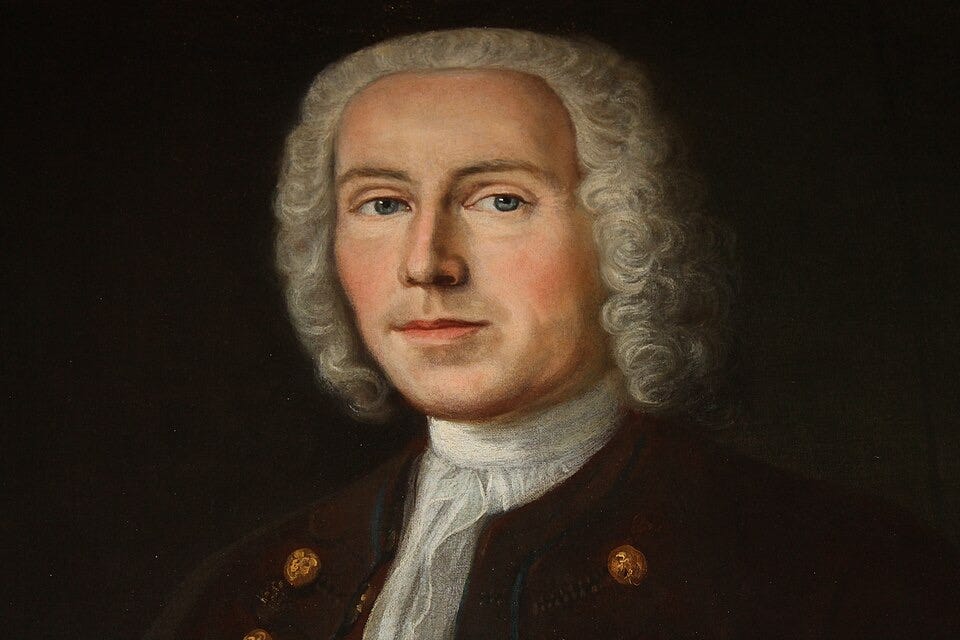
When the Declaration reached London in August 1776, he wrote to a friend that Congress had published a “most infamous paper reciting a great number of pretended tyrannical deeds of the King.” Then he sat down and wrote a formal rebuttal. He finished it on October 15, 1776. His Strictures upon the Declaration of the Congress at Philadelphia was published in November, as an anonymous letter addressed to a British lord.1
His opening shot set the tone. He wrote that upon first reading the Declaration, he thought “there would have been more policy in leaving the World altogether ignorant of the motives to this Rebellion, than in offering such false and frivolous reasons in support of it.”2
He had a specific legal argument at the center of everything. The Declaration opens by describing two peoples, the colonies and the kingdom of Great Britain, connected by political bands that can be dissolved. Hutchinson said that was simply false:
They begin, my Lord, with a false hypothesis, That the Colonies are one distinct people, and the kingdom another, connected by political bands. The Colonies, politically considered, never were a distinct people from the kingdom. There never has been but one political band, and that was just the same before the first Colonists emigrated as it has been ever since.3
From there he went through all twenty-seven charges against the king, grievance by grievance. His method was the same each time: show what the Declaration claimed, then show what actually happened. The results were often damaging to Jefferson’s version of events.4
Take the charge that the king had called colonial assemblies together in unusual and uncomfortable places far from their records, just to fatigue them into compliance. Hutchinson named the specific incident this referred to, the Massachusetts assembly being moved from Boston to Cambridge in 1768 after city riots. He walked through the record: Cambridge was four miles away, the assembly had met there voluntarily before when smallpox threatened Boston, the rooms were convenient, the move was within normal gubernatorial authority. Then he delivered his verdict:5
A brief narrative of this unimportant dispute between an American Governor and his Assembly, needs an apology to your Lordship; how ridiculous then do those men make themselves, who offer it to the world as a ground to justify Rebellion?6
The charge about “swarms of officers” eating out the colonists’ substance was another target. Hutchinson counted the actual numbers: five customs commissioners, four surveyors general replaced, perhaps fifteen to twenty additional clerks. He called them “thirty or forty additional officers on the whole Continent” against three million people. He did not make the number up. He knew the records.7
He went after the self-evident truths next. Jefferson had written that all men possessed unalienable rights to life, liberty, and the pursuit of happiness. Hutchinson pressed on what that actually meant, then turned the argument directly on the men who signed it:
I could wish to ask the Delegates of Maryland, Virginia, and the Carolinas, how their Constituents justify the depriving more than an hundred thousand Africans of their rights to liberty, and the pursuit of happiness, and in some degree to their lives, if these rights are so absolutely unalienable.8
He was not making an abolitionist argument. He was pointing out a contradiction. And the contradiction was real. Jefferson owned over two hundred enslaved people when he wrote those words. The Congress that adopted the Declaration included slaveholders throughout the southern delegations. Hutchinson saw the hypocrisy clearly and said so.
The Strictures were not a wild screed. They were the work of a man who knew colonial law and history in detail, who had governed Massachusetts through a decade of escalating crisis, and who genuinely believed that independence had been the goal all along, with the taxation disputes manufactured as pretexts. He said this directly: the Declaration’s grievances were, many of them, “either grossly misrepresented or so trivial and insignificant as to have been of no general notoriety.”
He saved his sharpest observation for the closing paragraphs. The Declaration had claimed it was published out of “decent respect to the opinions of mankind.” Hutchinson didn’t believe that for a moment:9
Though the professed reason for publishing the Declaration was a decent respect to the opinions of mankind, yet the real design was to reconcile the people of America to that Independence, which always before, they had been made to believe was not intended. Discerning men have concealed their sentiments, because under the present free government in America, no man may, by writing or speaking, contradict any part of this Declaration, without being deemed an enemy to his country, and exposed to the rage and fury of the populace.10
That was his final argument. The Declaration worked as propaganda precisely because it silenced dissent inside America. Anyone who disagreed with it was branded a traitor. Hutchinson, writing from London, could say what he thought. People in Philadelphia and Boston could not.
He was not entirely wrong about that either.
The Strictures were published in November 1776 and forgotten almost immediately, even in Britain. Hutchinson died in 1780, still in exile, never having returned to the colony he had spent his life serving. His diary records the last years as a slow erosion, old friends dying, news from home growing worse, the world moving away from him without pause.
Lind: The Government’s Answer
While Hutchinson was writing on his own initiative, the British government had a problem. The Declaration had appeared in most of London’s leading newspapers by late August 1776. It needed an official response. But it would be beneath the dignity of a sovereign to publicly debate with revolted subjects. King George III and his ministers would not respond directly.
So they found someone else to do it.
Jonathan Lind was a London barrister, a Tory pamphleteer with connections to Lord North’s government and to the prominent legal philosopher Jeremy Bentham. He was not a household name, but he was effective, and he was available. With unofficial encouragement from Tory members of Parliament, he wrote An Answer to the Declaration of the American Congress. It ran 132 pages. He called the Declaration “that audacious paper” and dismissed it as full of “calumnies.”
The difference between Lind and Hutchinson is visible on every page. Hutchinson wrote as someone who had lived the history he was describing. Lind wrote as a skilled advocate doing a job. Where Hutchinson was methodical and at times almost melancholy, Lind was contemptuous. He described the grievance about uncomfortable meeting places as “so truly ridiculous” that “it is hardly possible to answer it with any becoming gravity,” mocking the idea that colonial assemblymen being asked to sit on “strange seats” and sleep in “strange beds” could justify a national revolt. The sarcasm was well-aimed.11
Lind also embedded, in the final twelve pages of his pamphlet, a short philosophical essay by Bentham attacking the concept of natural rights itself. Unalienable rights, Bentham argued, were a fiction. Government created rights. Rights did not exist before government, so rights could not be used to overthrow government. It was a pointed rebuttal to the Declaration’s entire philosophical foundation, and it anticipates arguments Bentham would develop through the rest of his career.12
Neither Lind nor his Answer had much impact. The problem was structural. It took him 132 pages to respond to fewer than two dozen sentences of grievances. The Declaration won the argument before the argument even started: it was short, it was clear, it was written for common readers. Lind’s detailed legal rebuttal required sustained attention from readers who had already made up their minds. As one scholar later put it, Lind’s work “remains a piece of arcana, buried in the dustheap of history,” while the Declaration continues to command an international audience.12, 14
Chalmers: The Planter Takes a Pen Name
James Chalmers arrived in the American Colonies in 1760 with £10,000 in his pocket (roughly $3.3 million today), money he had earned working in the West Indies sugar trade starting at age thirteen. That fortune came from an industry built on enslaved labor. He settled in Kent County on Maryland’s Eastern Shore, married an heiress named Ariana Margaretta Jekyll, and built himself a plantation. By the time the revolution started, he owned 1,398 acres of what contemporaries called some of the best land in America, along with 22 horses, 24 head of cattle, and 15 enslaved Africans. The man who would later write that “Independence and Slavery are Synonymous Terms” owned fifteen people.13
He was a man with a great deal to lose.
In January 1776, Thomas Paine published Common Sense. It swept through the colonies like nothing before it. Paine argued that monarchy was inherently corrupt, that kings were a bad idea on principle, and that American independence was not just practical but morally necessary. The New York Constitutional Gazette called it a “wonderful production.” Half a million copies circulated in a country of two and a half million people.
Chalmers waited weeks for someone to answer it.
Nobody did. So he did it himself.
In March 1776, writing under the pen name “Candidus” to avoid charges of seditious libel, he published Plain Truth; Addressed to the Inhabitants of America. He addressed it directly to John Dickinson. This was deliberate. Dickinson was the most prominent moderate in the Continental Congress, the man who had already written the Letters from a Farmer in Pennsylvania and who, even then, was holding out against independence. Chalmers was calling on him publicly to use his influence to stop the slide toward separation.14
Where Hutchinson’s argument was constitutional and historical, Chalmers went practical. His central move was military math.
He worked through the numbers. The colonies had roughly 160,000 to 170,000 men capable of bearing arms. Subtract the Quakers, the Anabaptists, and others who would not fight on religious grounds, and you were down to perhaps 60,000 to 70,000. Against the most powerful military empire in the world. He asked plainly whether those were the odds you wanted to take.15
Paine had argued the colonists would find allies, that France and Spain would come to their aid. Chalmers dismissed this. France and Spain were not interested in American liberty. They were interested in British distraction. He called Common Sense a work of “quackery” and said Paine should have added to the title: “Common Sense, and blood will attend it.”
He closed with a sentence historians still quote: “Independence and slavery are synonymous terms.”16
He meant it economically and politically. Without British trade networks, without British protection, without British credit, the colonies would be at the mercy of whoever happened to want what they had. Independence, in his view, was not freedom. It was exposure.
Later historians would describe Plain Truth as “atrociously written,” its “ponderous, wandering prose” appealing to elites who were already gone. Chalmers had sound arguments. He could not make them land.17
What Happened to Them
The pamphlet did not go over well in Chestertown. By summer 1776, the local Patriots had identified “Candidus” as Chalmers. Neighbors who had known him for years turned hostile. He testified later that he was “molested, insulted and much bruised by the populace.” He armed his household and prepared to defend it.18
In 1777, he followed the British Army under General Howe up the Chesapeake Bay toward Philadelphia. After the Battle of Brandywine, when Philadelphia fell to the British in October, Chalmers was commissioned lieutenant colonel of the First Battalion of Maryland Loyalists. He raised 400 men. He spent the rest of the war trying to convince British commanders to move on the Eastern Shore of Maryland, where he believed loyalist sentiment ran deep. They ignored him.
His regiment’s only significant military action was the 1781 siege of Pensacola, in Florida, where Spanish forces captured the entire unit. Chalmers himself was not there. He was in British-occupied New York at the time.
After the war, Chalmers went before the British Loyalist Compensation Board. His wife had stayed in Maryland, watching Patriots confiscate his land and livestock while she tried to hold onto whatever she could. The board determined he had been “an active and zealous loyalist” and compensated him for his losses. He told them he was going to Nova Scotia. He never went. He stayed in London, living in Chelsea, socializing with other expatriate loyalists, including William Franklin, the son of Benjamin Franklin and former royal governor of New Jersey. Men who had bet on the wrong side, waiting for something that was never coming back.
He died in 1806 at 12 Paradise Row, Chelsea. His gravestone reads: “Beneath this stone are deposited the remains of Col. James Chalmers late of Chelsea, County of Middlesex.” No mention of Maryland. No mention of Kent County. No mention of 1,398 acres and the best land in America.19
Jonathan Lind did not survive to see how the argument ended. He died in 1781, five years after publishing his Answer, at the age of forty-four. He outlasted his pamphlet by less time than it took the war to conclude. No exile, no compensation board, no gravestone in Chelsea. He simply died young, with the outcome still uncertain.20
Hutchinson was already gone by then, twenty-six years in the ground. He died in Brompton, England, in June 1780, still waiting to go home.21
Why Their Arguments Mattered, and Why They Were Ignored
History is written by whoever survives to write it. Hutchinson, Lind, and Chalmers were on the losing side, so their arguments disappeared. But that doesn’t mean the arguments were necessarily bad.
Hutchinson was correct that the Declaration’s grievances were selective and, in places, incomplete. He was correct that the Cambridge assembly relocation, listed in the Declaration as evidence of tyranny, was a routine administrative dispute that had been largely resolved. He was correct that the “swarms of officers” were thirty or forty people. He was correct that enslaved people were the most obvious counterexample to the claim that all men possessed unalienable rights, and that the Congress was not prepared to deal with that contradiction. He was correct that the Declaration functioned as internal propaganda, making it dangerous for anyone in America to publicly disagree with it.
Chalmers was correct that the military math was brutal. The Continental Army in 1776 was a genuine military problem. Washington would lose New York that summer. He would nearly lose New Jersey in the fall. The war came far closer to British victory than the Fourth of July mythology suggests. And French intervention, when it came in 1778, was exactly what Chalmers predicted. It was not a gift but a calculation, France using American blood to weaken Britain.
But here is what all three men missed. They were analyzing a document as if it were a legal brief or a military assessment. The Declaration of Independence was neither. It was an act of politics, a statement of intent directed at a world audience, and a call to arms dressed in the language of philosophy. Jefferson knew what he was doing. The argument wasn’t meant to survive cross-examination. It was meant to move people.
It worked.
There were approximately 500,000 Loyalists in the colonies at the start of the revolution, perhaps more, out of a white population of roughly two and a half million. They were not a fringe. They were neighbors, business partners, relatives. They included some of the best-educated, most successful people in colonial America. And almost none of them appear in the story we tell about 1776.22
Thomas Hutchinson, Jonathan Lind, and James Chalmers are what that absence looks like when you give it a name and a face.
Next: The Rest of the World Reads It
Hutchinson, Lind, and Chalmers were not the only ones who read the Declaration and had something to say. Phillis Wheatley, an enslaved woman in Boston, had been writing about liberty since before the war. Abigail Adams had already told her husband in March 1776 that if he didn’t remember the women, the women would not consider themselves bound by the laws he made. Native American leaders were watching from the frontier, reading the signals in a document that called them “merciless Indian savages” in its final grievance.
The world was watching. Part Three covers what they saw.
Notes
Hutchinson’s initial reaction is documented in his letters to the Earl of Hardwicke. See Peter Orlando Hutchinson, ed., The Diary and Letters of His Excellency Thomas Hutchinson, Esq. (London, 1884), vol. 2, 93. The phrase “most infamous paper” appears in his letter of August 10, 1776.
Thomas Hutchinson, Strictures upon the Declaration of the Congress at Philadelphia, in a Letter to a Noble Lord (London, 1776), p. 4. Full text available at Internet Archive: archive.org/details/thomashutchinson00hutc. Also available at Teaching American History: teachingamericanhistory.org/document/strictures-upon-the-declaration/
Ibid., pp. 9-10. The “false hypothesis” passage is Hutchinson’s first major substantive argument, attacking the Declaration’s opening claim about two distinct peoples.
Ibid., p. 4. The “false and frivolous” phrase is Hutchinson’s opening characterization of the Declaration’s stated justifications.
Ibid., p. 13. The Cambridge assembly relocation incident. Hutchinson notes the assembly had sat there voluntarily before during smallpox outbreaks, making the charge of an “unusual” location legally and historically weak.
Ibid., p. 13. “How ridiculous then do those men make themselves” is the closing line of Hutchinson’s analysis of the Cambridge assembly grievance.
Ibid., p. 19. The “thirty or forty additional officers” passage, responding to the Declaration’s charge about “swarms of officers” harassing the colonists.
Ibid., p. 10. The slavery hypocrisy passage. Hutchinson specifically addresses the delegates from Maryland, Virginia, and the Carolinas.
Ibid., p. 28. Quoted in David Otersen, “That Audacious Paper: Jonathan Lind and Thomas Hutchinson Answer the Declaration of Independence,” Journal of the American Revolution, July 3, 2025. Available at allthingsliberty.com
Ibid., pp. 30-31. Hutchinson’s closing argument about the Declaration’s actual design as internal propaganda. This is the final substantive paragraph of the Strictures before his formal closing.
Jonathan Lind, An Answer to the Declaration of the American Congress (London, 1776), p. 3. Available at Internet Archive: archive.org/details/answertodeclarat00lind_2. Partial text at American Battlefield Trust: battlefields.org/learn/primary-sources/answer-declaration-american-congress Lind, An Answer, p. 29. The “strange seats and strange beds” passage mocking the uncomfortable meeting places grievance.
On Bentham’s contribution to Lind’s pamphlet, see Wikipedia, “John Lind (barrister),” and David Otersen, “That Audacious Paper,” Journal of the American Revolution, 2025. Bentham’s section, “A Short Review of the Declaration,” runs pp. 119-132 of An Answer. Stephen E. Lucas, “The Stylistic Artistry of the Declaration of Independence,” National Archives. Available at archives.gov/founding-docs/stylistic-artistry-of-the-declaration. Lucas notes that Lind needed 110 pages to answer charges Jefferson stated in fewer than two dozen sentences.
On Chalmers’s background and post-publication treatment: UELAC Loyalist Trails 2017-52 (source for the £10,000, the West Indies sugar trade, and the fifteen enslaved Africans on his Maryland estate); Wikipedia, “James Chalmers (loyalist).”
James Chalmers [Candidus], Plain Truth; Addressed to the Inhabitants of America (Philadelphia, 1776). The dedication to Dickinson appears at the pamphlet’s opening.
The military math argument: Chalmers, Plain Truth. Figures of 160,000-170,000 capable of bearing arms, reduced to 60,000-70,000 after exempting religious pacifists.
“Independence and Slavery Are Synonymous Terms”: Chalmers, Plain Truth, closing page. Confirmed via Wikipedia, “Plain Truth (pamphlet),” and Common Sense Wikipedia entry.
On Plain Truth’s reception: UELAC Loyalist Trails, Issue 2017-52. Available at uelac.ca. The phrase “atrociously written” is from later historians cited in that source.
On Chalmers being identified as “Candidus” and the subsequent community hostility: UELAC Loyalist Trails, Issue 2017-52. Chalmers testified before the Loyalist Compensation Commission that he was “molested, insulted and much bruised by the populace” beginning in summer 1776.
Chalmers’s gravestone inscription: Essex County Record Office, E.R.O. T/P 196/6. Reproduced in Wikipedia, “James Chalmers (loyalist),” and UELAC Loyalist Trails 2017-52.
Jonathan Lind (1737–1781). Wikipedia, “John Lind (barrister).”
On Hutchinson’s death: He died June 3, 1780, in Brompton, England. See Diary and Letters, vol. 2.
Loyalist population estimates: Robert M. Calhoon, “Loyalism and Neutrality,” in A Companion to the American Revolution, ed. Jack P. Greene and J.R. Pole (Oxford: Blackwell, 2000). Estimates of 15-20% of white colonial population as active Loyalists.
Selected Bibliography
Bailyn, Bernard. The Ordeal of Thomas Hutchinson. Cambridge: Harvard University Press, 1974.
Calhoon, Robert M. “Loyalism and Neutrality.” In A Companion to the American Revolution, ed. Jack P. Greene and J.R. Pole. Oxford: Blackwell, 2000.
Chalmers, James [Candidus]. Plain Truth; Addressed to the Inhabitants of America, Containing Remarks on a late pamphlet, entitled Common Sense. Philadelphia, 1776. Available via Internet Archive.
Hutchinson, Peter Orlando, ed. The Diary and Letters of His Excellency Thomas Hutchinson, Esq. 2 vols. London: Sampson Low, Marston, Searle, and Rivington, 1884.
Hutchinson, Thomas. Strictures upon the Declaration of the Congress at Philadelphia, in a Letter to a Noble Lord. London, 1776. Full text: Internet Archive (archive.org/details/thomashutchinson00hutc). Also at Teaching American History (teachingamericanhistory.org).
Lind, John. An Answer to the Declaration of the American Congress. London, 1776. Full text: Internet Archive (archive.org/details/answertodeclarat00lind_2). Excerpts: American Battlefield Trust (battlefields.org).
Lucas, Stephen E. “The Stylistic Artistry of the Declaration of Independence.” National Archives. archives.gov/founding-docs/stylistic-artistry-of-the-declaration.
Maier, Pauline. American Scripture: Making the Declaration of Independence. New York: Alfred A. Knopf, 1997.
New, M. Christopher. Maryland Loyalists in the American Revolution. Centreville, MD: Tidewater Publishers, 1996.
Otersen, David. “That Audacious Paper: Jonathan Lind and Thomas Hutchinson Answer the Declaration of Independence.” Journal of the American Revolution, July 3, 2025. allthingsliberty.com.
UELAC (United Empire Loyalists’ Association of Canada). Loyalist Trails Newsletter, Issue 2017-52. uelac.ca.
Copyright © 2026 Richard Iorio. All rights reserved.